
Table of Contents
Smart Tree Care Tips for Homeowners
Post Preview
Key Takeaways
- Regular inspections are critical for catching risks and diseases early.
- Mulching, watering, and proper pruning sustain strong, resilient trees.
- Acting quickly against pests and diseases prevents long-term damage.
- Preparation before severe weather can minimize storm-related hazards.
- Complex and hazardous tree work should always be left to certified professionals.
Table of Contents
- Regular Inspections
- Proper Watering Techniques
- Mulching Benefits
- Pruning Best Practices
- Pest and Disease Management
- Storm Preparation
- When to Seek Professional Help
Competent not only add beauty and shade to your property, but they also play a vital role in improving local air quality, conserving energy, and supporting wildlife habitats. Proper tree care is essential to maximizing these benefits and keeping your landscape safe and attractive year-round. For larger landscape management or complex tasks, seeking help from a commercial tree company Flower Mound can offer professional results and peace of mind.
Whether you are caring for newly planted saplings or mature oaks, implementing innovative tree maintenance practices can extend your trees’ health and the value they add to your property. Healthy trees can even increase your home’s resale value by up to 19 percent, according to the Arbor Day Foundation.
Smart tree care starts with understanding your landscape’s unique needs, including soil type, irrigation challenges, and the species of trees present. With just a little regular attention, you can prevent costly damage and promote vibrant, lively yards that contribute to your community and the environment. Resources from established authorities, such as the U.S. Environmental Protection Agency, further affirm the benefits of practicing significant friendly tree management at home.
Neglecting simple maintenance steps is one of the leading causes of tree decline in residential neighborhoods. By taking purposeful action each season, you protect not only your investment but also the safety and well-being of your neighbors and the local ecosystem.
Regular Inspections
Establishing a monthly routine of inspecting your trees is fundamental for maintaining overall health and catching problems at their earliest stages. Look closely at leaves, branches, and bark during your walks. Search for dead limbs, fungal growth, cracks in the trunk, or signs of insect infestations. Detecting subtle changes early, such as yellowing foliage or oozing sap, is the best way to stop minor concerns from turning into major problems that require more extensive intervention.
During your assessment, also check for potential hazards. Branches that overhang your roof, driveway, or power lines can pose serious threats during storms or high winds. Remove any dead wood or limbs that show signs of disease or decay, and consider consulting local extension services for help with tree identification and evaluation.
Proper Watering Techniques
The right watering approach is central to the growth of vigorous, deep-rooted trees. Newly planted or young trees (up to three years old) demand more frequent watering, especially during dry spells or extreme heat. Instead of shallow, daily sprinklings, deliver slow, deep soaks a couple of times a week to encourage strong, downward root growth. For mature trees, apply water less often but for longer periods, ensuring moisture reaches 12 to 18 inches below the surface where most roots are found.
Excess water is just as harmful as too little, as it can lead to root rot and foster fungal growth. Make sure the soil around your trees drains well and only water when the soil is dry an inch or two down. If you suspect irrigation issues, a soil moisture meter can be a helpful investment for any homeowner.
Mulching Benefits
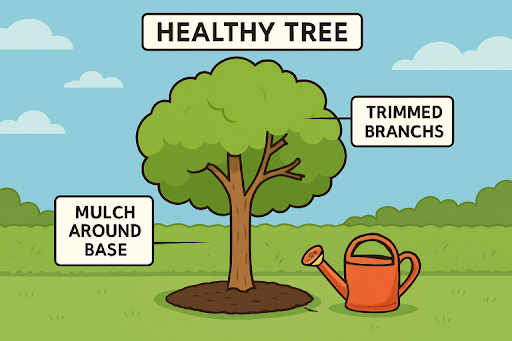
Adding mulch is a simple but highly effective strategy for improving soil health, regulating temperature, and retaining precious moisture during hot Texas summers. Spread a 2-4 inch layer of organic mulch (such as wood chips or shredded bark) in a wide ring around the base of the tree, but keep the mulch 2-4 inches away from the trunk. Piling mulch against the trunk will trap moisture and accelerate decay, leading to fungal infections and pest problems.
Additional Advantages of Mulching
- Suppresses weeds, reducing competition for nutrients
- Minimizes soil compaction and erosion
- Feeds soil microbes, improving fertility naturally
Regularly replenish your mulch each spring to maintain its thickness and effectiveness throughout the year. For more detailed guidance, check out information from trusted sources like Better Homes and Gardens.
Pruning Best Practices
The optimal time to prune most trees is during their dormant period (typically late fall to early spring), when energy reserves are stored in the roots and trees are less vulnerable to pests and diseases. Start by removing dead, broken, or diseased branches. Then, address crossing or rubbing limbs and gently thin out excess growth to open up the canopy and improve air circulation. Resist the urge to over-prune, as excessive removal disrupts natural growth patterns and can weaken the tree’s structure.
Sharp, clean tools are a must for safe pruning. For larger branches or high limbs, use a professional or contact an arborist to avoid injury and ensure healthy regrowth.
Pest and Disease Management
Familiarize yourself with common local tree pests and diseases that can rapidly spread in warm, humid environments like those in Texas. Symptoms include wilting leaves, unusual spots, cankers, or bark borings. Early recognition and a prompt response can limit damage and save the affected tree. Biological treatments, debris removal, and maintenance of overall tree health are effective natural solutions for many common problems.
When to Call for Help
If you notice advanced signs of disease or a widespread pest infestation, it is time to consult a certified arborist with specialized training to provide effective treatment options and guidance for future prevention.
Storm Preparation
Preparing your trees before heavy winds, hail, or hurricanes reduces the risk to your property and increases their resilience. Prune away weak, long, or overhanging branches before storm season. Assess each tree’s structure and ensure it is well-balanced and not leaning excessively. Proper staking of young trees is also important to prevent uprooting. Schedule an annual consultation with a tree care expert for risk assessment if you are uncertain about the safety of large or aging specimens on your property.
When to Seek Professional Help
While routine care can be handled at home, some tasks should always be left to the pros. Tree removal, large-limb pruning, disease diagnosis, and root issues are all potentially hazardous projects that require expert knowledge and specialized equipment. Certified and insured arborists not only keep you safe but also ensure that tree work complies with local regulations. Investing in professional advice today can save money and trouble down the road if an issue is too complex or dangerous to resolve on your own.
Adopting these smart tree care habits ensures your home landscape stays beautiful, resilient, and safe for years to come. With regular maintenance and a proactive approach for each season, you can enjoy thriving trees and the many benefits they bring to your environment and quality of life.