
Table of Contents
Key Takeaways
- Measure the room, entry points, and walking paths before shopping.
- Choose furniture for daily routines, not just showroom appeal.
- Compare materials, construction, comfort, and care needs.
- Use flexible pieces when rooms serve multiple purposes.
- Ask about finishes, adhesives, ventilation, and product documentation.
- Review delivery, assembly, return, and warranty details before ordering.
Furniture should make everyday life easier, not simply make a room look finished. Whether you are furnishing one room or an entire home, exploring luxury home furniture in Salt Lake City or comparing options elsewhere, the best choice begins with the way you actually live.
A beautiful sofa that blocks a walkway, a dining table that cannot expand for guests, or a stylish chair that is uncomfortable after ten minutes will not serve your home well. The right furniture balances dimensions, comfort, construction, maintenance, and your long-term needs.
Start With The Room
Take measurements before falling in love with a color or silhouette. Record room length, width, ceiling height, doors, windows, vents, outlets, radiators, and built-ins. Also measure hallways, stair turns, elevators, gates, and door openings so the piece can reach its destination.
Use painter’s tape to outline a sofa, bed, table, or storage unit on the floor. This simple test reveals whether the piece leaves enough space to walk, open drawers, recline a chair, and pull dining chairs away from the table.
Helpful Measurement Checklist
- Room width and length, plus the usable wall space.
- Doorway width and height, including hallway turns.
- Locations of windows, outlets, and heating or cooling vents.
- Clearance for drawers, cabinet doors, and reclining mechanisms.
Match Furniture To Daily Life
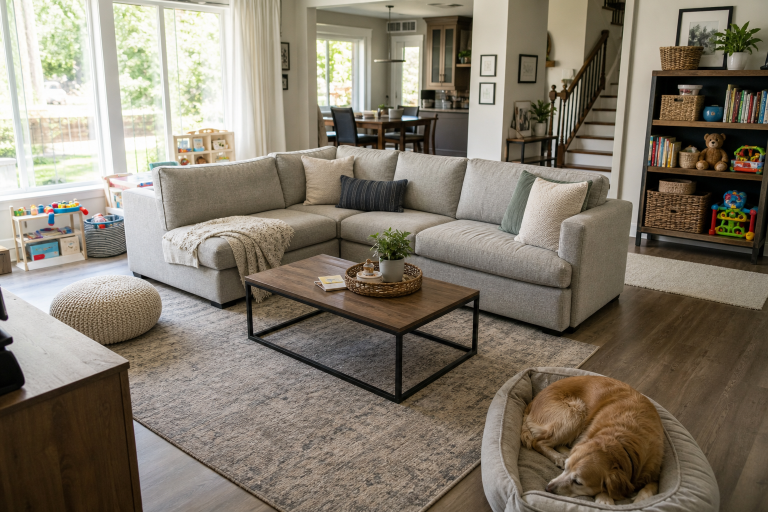
Consider what happens in the room during a normal week. A family room used for movie nights, snacks, pets, and play needs durable, easy-clean surfaces. A formal sitting room can accommodate more delicate upholstery or a statement table that would be impractical in a busy space.
Ask who uses the room most, whether food and drinks will be nearby, how much maintenance feels realistic, and whether the room doubles as an office, guest space, or hobby area. Homes with children may benefit from rounded corners and washable fabrics, while remote workers may need supportive seating and useful cable management.
Get The Scale Right
Furniture can fit physically and still look out of place. Scale is the relationship between a piece, the room, and the objects around it. A deep sectional may suit a large living room, but it can overwhelm a narrow apartment. Conversely, a small chair can seem lost beside tall ceilings and wide open walls.
Consider visual weight as well as measurements. Dark finishes, thick arms, oversized cushions, and enclosed bases tend to feel heavier. Rugs, lighting, and nearby storage also affect how large a piece appears. Balance substantial furniture with open floor space and lighter accents.
Compare Materials And Construction
Look beyond the visible finish. Solid wood can be durable and repairable, while quality plywood may provide stability, and engineered wood can be appropriate for lower-impact uses. Metal is often strong and slim, glass can make a room feel open, and upholstery should be selected for both comfort and ease of cleaning.
Check that frames sit level, legs feel secure, joints are even, drawers glide smoothly, and doors close without rubbing. For seating, inspect cushion support and ask how covers, leather, or fabric should be cleaned. Good construction is often more valuable than a fashionable finish that will be difficult to maintain.
Think About Comfort And Accessibility
Comfort is personal, so test furniture as you would use it at home whenever possible. Sit back in a chair, lean on the arms, check seat depth, and notice whether your feet reach the floor. For beds, consider mattress height and how easy it is to get in and out.
People with back, knee, or mobility concerns may prefer firmer cushions, supportive backs, stable armrests, and seats that make standing easier. Attractive furniture is not a successful purchase if it causes discomfort or discourages people from using the room.
Choose Flexible Pieces
Flexible furniture is valuable when it solves a real problem. Extendable tables can support holidays without dominating daily meals. Storage ottomans can contain blankets and provide extra seating. Nesting tables, movable benches, modular seating, and sleeper sofas can help one room do more than one job.
However, multifunctional does not automatically mean better. Avoid pieces that are difficult to unfold, too heavy to move, or uncomfortable in their primary role. Choose flexibility only when it supports your household’s routines.
Consider Indoor Air Quality
New furniture may include composite wood, adhesives, coatings, foam, or upholstery treatments. Pressed wood products used in furniture and cabinetry can be sources of indoor formaldehyde, particularly when adhesives are used.
Ask retailers or manufacturers about emissions testing, material certifications, finishes, and care guidance. Ventilate the space after new furniture arrives when practical, and rely on product documentation rather than odor alone. In February 2026, the EPA proposed an additional quality-control test method for composite wood products, reinforcing the value of material transparency.
Plan The Buying Process
Create a short list before shopping. Set a complete budget that includes taxes, delivery, assembly, removal of old furniture, and any protection plan. Save dimensions, fabric names, finish samples, care instructions, and photos to keep comparisons accurate.
Lead times matter when a move, renovation, or event has a fixed date. Before placing an order, confirm the delivery process, assembly responsibilities, return window, restocking fees, warranty coverage, and what happens if the item arrives damaged.
Simple Five-Step Buying Plan
- Measure the room and delivery route.
- List the room’s main jobs and regular users.
- Set a realistic all-in budget.
- Compare comfort, materials, and construction.
- Confirm delivery, care, warranty, and return details.
Common Mistakes To Avoid
- Buying before measuring the room and the delivery path.
- Choosing style before comfort and daily durability.
- Ignoring clearance for doors, drawers, recliners, and walkways.
- Inspecting only the front of a piece instead of its frame, hardware, and underside.
- Selecting delicate materials for a high-use room.
- Skipping warranty, care, and return policy details.
Frequently Asked Questions
How Do You Know If Furniture Is The Right Size?
It should fit through the delivery route, leave a comfortable walking space, and look proportionate to the room. A painter’s tape outline is an easy way to test the footprint before purchase.
What Should You Check Before Buying A Sofa?
Check overall dimensions, frame stability, cushion support, seat depth, upholstery care, and delivery access. Sit on it long enough to assess real comfort.
Is Solid Wood Always Better Than Engineered Wood?
No. Solid wood can offer repairability, while well-made engineered wood can be stable and useful. The quality of construction and intended use matter most.
What Should You Do If New Furniture Has A Strong Odor?
Follow the care instructions, increase ventilation when possible, and allow time for the piece to air out. If irritation or breathing issues occur, move away from the source and seek qualified guidance.
Conclusion
The best furniture fits real life first. Measure carefully, choose for the room’s everyday use, evaluate construction and comfort, and confirm the buying details before committing. Those steps help create rooms that look intentional, feel welcoming, and continue to work well over time.